 how-to
How to Maximize Group Event Revenue at Your FEC
Table of Contents
- Step 1: Build a Group Event Pricing Strategy That Protects Your Margins
- Step 2: Choose FEC Event Booking Software That Reduces Friction
- Step 3: Apply Upselling Strategies for FEC Parties at Every Touchpoint
- Step 4: Target the Right Demographics for Group Bookings
- Step 5: Increase Foot Traffic and Off-Peak Use
- Step 6: Retain Group Clients With Loyalty and Referral Programs
- Step 7: Measure ROI and Operational Efficiency During High-Volume Events
- Conclusion: Turning Group Events Into a Revenue Engine
- Frequently Asked Questions
Last Updated: September 23, 2026
Step 1: Build a Group Event Pricing Strategy That Protects Your Margins
Group event revenue is the profit center most FECs underprice. Birthday parties and corporate outings fill your floor on weekdays, but if your package prices don't cover labor, food cost, and wear and tear, a busy Saturday can still lose money.
Dynamic Pricing Models for Groups
Dynamic pricing adjusts rates by demand, group size, and timing. A Tuesday school group and a Saturday birthday party should never pay the same rate.
A simple model:
- Peak weekend slots: full price
- Weekday afternoons: 10-15% below peak
- Large groups (30+ guests): tiered discount
- Off-season months: bundled add-ons instead of discounts
Package Tiers That Drive Higher Spend
Three tiers beat five. Too many choices overwhelm guests, who default to the cheapest option.
Step 2: Choose FEC Event Booking Software That Reduces Friction
FEC event booking software handles reservations, deposits, waivers, and scheduling in one place, cutting phone calls and double-bookings while letting organizers book online anytime.
Must-Have Features for Group Bookings
Check for these before you commit:
- Online booking with real-time availability
- Automated deposit collection
- Digital waivers for every guest
- Package and add-on selection at checkout
- Automatic confirmation and reminder emails
- Reporting on conversion rate by package type
- Integration with your POS and CRM
If a system can't show you which packages convert best, you're flying blind. Booking software should also flag peak hours so you can push off-peak incentives automatically.
Step 3: Apply Upselling Strategies for FEC Parties at Every Touchpoint
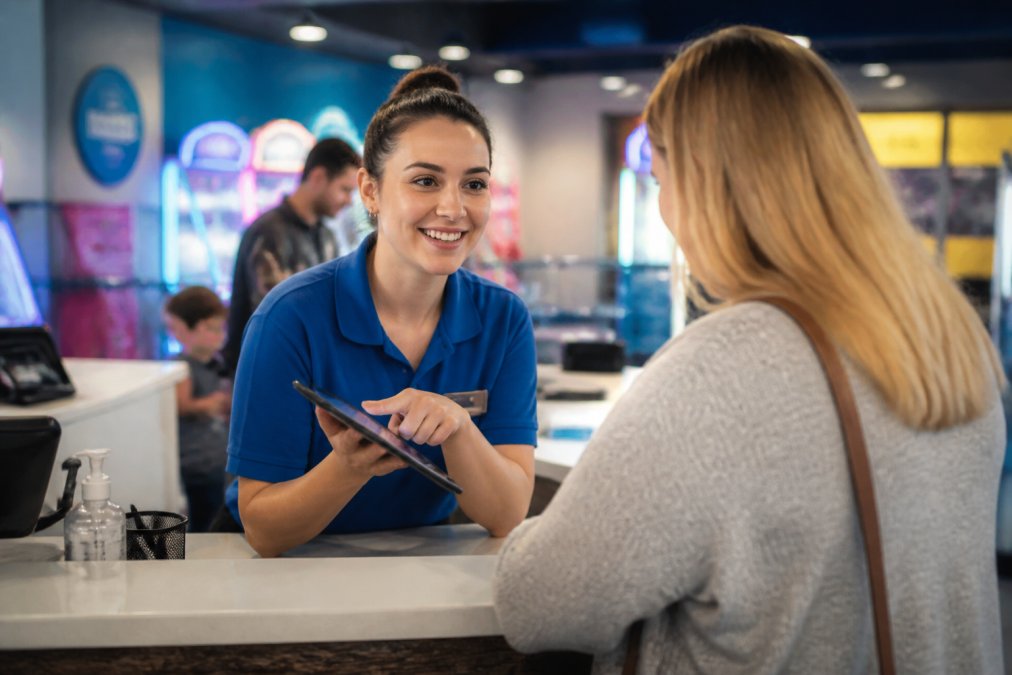
Upselling strategies for FEC parties work best built into the booking flow. Guests who see add-ons early spend more and feel less pressured.
Pre-Event, On-Site, and Post-Event Upsell Opportunities
Each stage offers a different chance to add value.
| Stage | Upsell Opportunity | Why It Works |
|---|---|---|
| Pre-event | Upgrade to a bigger package, add food | Guest is planning, budget is open |
| Pre-event | Add a party host or decorations | Low effort for the guest |
| On-site | Extra arcade cards, additional pizza | Impulse-friendly, immediate payoff |
| On-site | Photo package, branded merchandise | Captures the memory |
| Post-event | Loyalty signup, future event discount | Turns one visit into repeat visits |
Step 4: Target the Right Demographics for Group Bookings
Group bookings come from a few reliable sources. Knowing which fit your venue lets you focus marketing spend instead of chasing every lead.
Schools, Churches, and Corporate Outings
- School groups want fixed pricing, safety info, and simple logistics. Book them on weekday mornings during low traffic.
- Church groups often book weekend afternoons and value group rates and flexible timing.
- Corporate outings pay the most per head and want private space, catering, and team-building options.
Corporate clients are your highest-margin segment. Build a dedicated page with lead forms and a downloadable event package PDF.
Step 5: Increase Foot Traffic and Off-Peak Use
Foot traffic and off-peak use are two sides of the same problem. Peak hours take care of themselves; the money you're leaving sits in empty weekday slots.
Tactics that work:
- Partner with local schools for field trips
- Run weekday homeschool meetups
- Offer senior center and community group rates
- Host fundraising events with an in-kind contribution
- Bundle arcade time with food specials on slow nights
Step 6: Retain Group Clients With Loyalty and Referral Programs
Most FEC content stops at the booking. The real revenue leak is the 72 hours after the group leaves, when a one-time booking either becomes a recurring account or disappears. Here's the post-event retention playbook competitors skip.
The 72-Hour Post-Event Window
Organizers decide whether to rebook based on how the event ended. Build a three-touch sequence:
- Within 2 hours: Send a thank-you email with a photo link, a one-question survey ("How likely are you to book again?"), and a pre-filled rebooking link for the same slot next year.
- Within 48 hours: Send the organizer a shareable recap, headcount, add-ons purchased, and a referral code worth a credit for both parties.
- Within 72 hours: If the survey score was 8 or higher, have a staff member call the organizer directly. High-satisfaction organizers convert to rebookers at dramatically higher rates when a human follows up.
Convert Group Attendees Into Individual Customers
A 40-person birthday party is 40 potential individual customers, parents, siblings, and kids who now know your venue. Capture them:
- Attendee-level loyalty enrollment: Put a QR code on every party favor, wristband, and table card that signs the guest up for your loyalty program on the spot. Offer a small bonus (a free arcade credit) for enrolling during the event.
- Household tagging in your CRM: When the organizer books, tag every guest household in your POS/CRM. When those households visit individually, you can attribute the visit back to the group event, and see which group types produce the best downstream individual spend.
- Sibling and friend offers: Send a "bring a friend" pass to every attendee household within a week. This is the single cheapest way to convert a group event into individual repeat visits.
Referral Mechanics That Actually Get Used
Generic "refer a friend" programs fail because the reward is vague. Make it concrete:
- Two-sided credit: The referring organizer and the new organizer each get a fixed credit applied to their next booking. Both sides need a reason to act.
- Trackable codes: Issue a unique referral code per organizer so you can see who actually drives bookings, and reward the top referrers with a VIP tier.
- School and church multipliers: For organizations that book annually (schools, churches, leagues), offer a tiered referral bonus that grows with each group they bring in. These organizations talk to each other constantly; a working referral program compounds.
Loyalty Tiers Built for Organizers, Not Guests
Reward the decision-maker, not attendees. A simple three-tier structure:
- Tier 1, Repeat Booker: Book 2 events in 12 months, get a fixed discount on the third.
- Tier 2, Preferred Organizer: Book 3+ events or refer 2 new groups, unlock priority booking on peak dates and a dedicated event coordinator.
- Tier 3, Partner: Quarterly or annual bookers get locked-in pricing, first access to new attractions, and co-branded marketing support.
Measure Retention, Not Just Bookings
The metric that matters is not how many groups booked this quarter, it's what percentage rebooked. Track:
- Rebooking rate by group type (schools, churches, corporate, birthday)
- Attendee-to-individual conversion rate (how many party guests return on their own)
- Referral-driven bookings as a share of total group revenue
- Time-to-rebook (how many days between a group's first and second event)
Step 7: Measure ROI and Operational Efficiency During High-Volume Events
Revenue without measurement is a guess. Here are the KPIs, the high-volume operational playbook, and the post-event review that turns one event into a repeatable system.
The Group Event ROI Framework
Stop measuring group events by top-line revenue. Measure them by contribution margin per event and per guest. Build a one-page scorecard for every group booking:
| Metric | What It Tells You | Target Direction |
|---|---|---|
| Revenue per group booking | Deal size health | Up |
| Revenue per guest | Package and upsell effectiveness | Up |
| Contribution margin per event | True profitability after labor, food, and credits | Up |
| Labor cost as % of event revenue | Staffing efficiency | Down |
| Add-on attach rate | Upsell program performance | Up |
| Inquiry-to-booking conversion rate | Sales process health | Up |
| Repeat booking rate (12-month) | Retention health | Up |
| Attendee-to-individual conversion rate | Downstream customer value | Up |
| Capacity utilization (booked vs. available slots) | Off-peak fill | Up |
Operational Efficiency During High-Volume Events
Marketing gets groups in the door. Operations determine whether they spend and return. The failure points are predictable:
- Check-in bottleneck: Pre-print or pre-load wristbands and waivers before the group arrives. A dedicated group check-in lane keeps walk-in guests from queuing behind a 40-person party.
- Staffing ratios: Assign a dedicated event host per group above a set headcount threshold (commonly 20-25 guests). One host per group is the difference between a smooth event and a chaotic one.
- Food and beverage staging: Pre-order and stage food before the group's scheduled meal window. Food courts that get slammed mid-event lose add-on revenue and generate complaints.
- Attraction capacity planning: Stagger group access to high-demand attractions (laser tag, go-karts, ropes courses) so group flow doesn't collide with walk-in demand. A simple rotation schedule prevents the single biggest source of guest friction.
- Walk-in guest protection: High-volume group days can degrade the experience for individual guests. Reserve a portion of attraction capacity for walk-ins, and communicate group schedules to front-line staff so they can redirect traffic.
The Post-Event Review Process
Run a 15-minute structured debrief after every large booking, covering four questions:
- What did we promise, and what did we deliver? Compare the booked package against actual delivery.
- Where did guests wait, and for how long? Note every queue over a set threshold.
- What did we sell beyond the package? Add-on attach rate for this event vs. your average.
- What is the one thing we fix before the next event? One change per event compounds fast.
Conclusion: Turning Group Events Into a Revenue Engine
Group events should be your most predictable revenue source, not your most chaotic. Winners build pricing that protects margins, software that removes friction, and retention systems that keep groups coming back.
Frequently Asked Questions
What are the most profitable types of group events for an FEC?
Corporate outings and school groups typically deliver the highest revenue per head because they book larger headcounts, often during off-peak weekday hours, and spend more on food and beverage add-ons. Birthday party packages remain the volume leader for repeat bookings. The key is to build tiered packages that fit each segment's budget while protecting your profit margins through smart upselling and dynamic pricing.
How do you calculate revenue per square foot for event spaces?
Divide total event revenue by the usable square footage of your event areas. Track this monthly and compare peak vs off-peak utilization. If a party room generates less revenue per square foot than open arcade floor, adjust pricing or repurpose the space. Reviewing this metric alongside group bookings data helps you decide where to invest in capacity management and event logistics improvements.
How can dynamic pricing increase revenue for FEC parties?
Dynamic pricing adjusts group event rates based on demand, day of week, and booking lead time. Charge more for Saturday afternoons and less for Tuesday mornings to fill off-peak utilization. This approach raises average revenue per booking without raising your base rates. Pair it with your FEC event booking software so pricing updates automatically and staff never have to negotiate manually.
What are the best practices for upselling add-ons during group bookings?
Offer add-ons at three points: during booking, at check-in, and mid-event. During booking, present upgrade options in your package tiers. At check-in, have staff suggest food, beverage, or arcade card bundles. Mid-event, offer extras like extra game time or photo packages. Train staff to suggest rather than push, and track conversion rate per touchpoint so you know which upsells actually move the needle.