 ultimate-guide
FEC Startup Budget Breakdown 2026
Table of Contents
- What Is an FEC Startup Budget and Why It Matters
- Family Entertainment Center Startup Costs: The Complete Cost Breakdown
- FEC Working Capital Requirements and Operating Runway
- FEC Startup Budget Template and Allocation Strategy
- FEC Startup Contingency Planning and Risk Buffer
- Financing Options and Break-Even Analysis for New FECs
- Cost Scenarios by Venue Size and Attraction Mix
- Conclusion
- Frequently Asked Questions
Last Updated: October 13, 2026
What Is an FEC Startup Budget and Why It Matters
"FEC" is an overloaded acronym. Confirm which FEC you are planning for, the two meanings produce completely different financial documents.
FEC as family entertainment center. In the commercial context, the one this guide addresses, an FEC is a venue combining arcade games, physical attractions (laser tag, climbing walls, bowling, trampolines, soft play), food and beverage, and party or event space.
The two budgets share almost no line items: a campaign committee budget is dominated by payroll, media buys, and compliance costs; an FEC startup budget by real estate, construction, and attraction hardware.
Why a detailed startup budget matters for the commercial FEC:
- Financing. Lenders and investors underwrite the plan, not the idea. A line-item budget with assumptions, ranges, and a contingency reserve is what gets a term sheet.
- Cash-flow survival. Most FEC failures are working-capital failures, not concept failures. The venue opens, revenue ramps slower than projected, and the operator runs out of cash before breakeven.
- Vendor leverage. A budget that shows you understand lead times, installation costs, and payment schedules lets you negotiate deposits, progress payments, and delivery terms from a position of knowledge.
First-time operators often budget the build and forget the burn. The build is a one-time capital event; the burn is a monthly reality until customer volume stabilizes.
This guide covers each cost category, scenario-based totals by venue size and attraction mix, working capital and operating runway, and financing and break-even mechanics.
Family Entertainment Center Startup Costs: The Complete Cost Breakdown
Total cost to open an FEC varies widely by venue size, attraction mix, and location. A small FEC (3,000-5,000 sq ft) with basic attractions may require $500,000 to $1.2 million. A mid-size venue (8,000-12,000 sq ft) with a diverse attraction portfolio usually requires $1.5 million to $3 million.
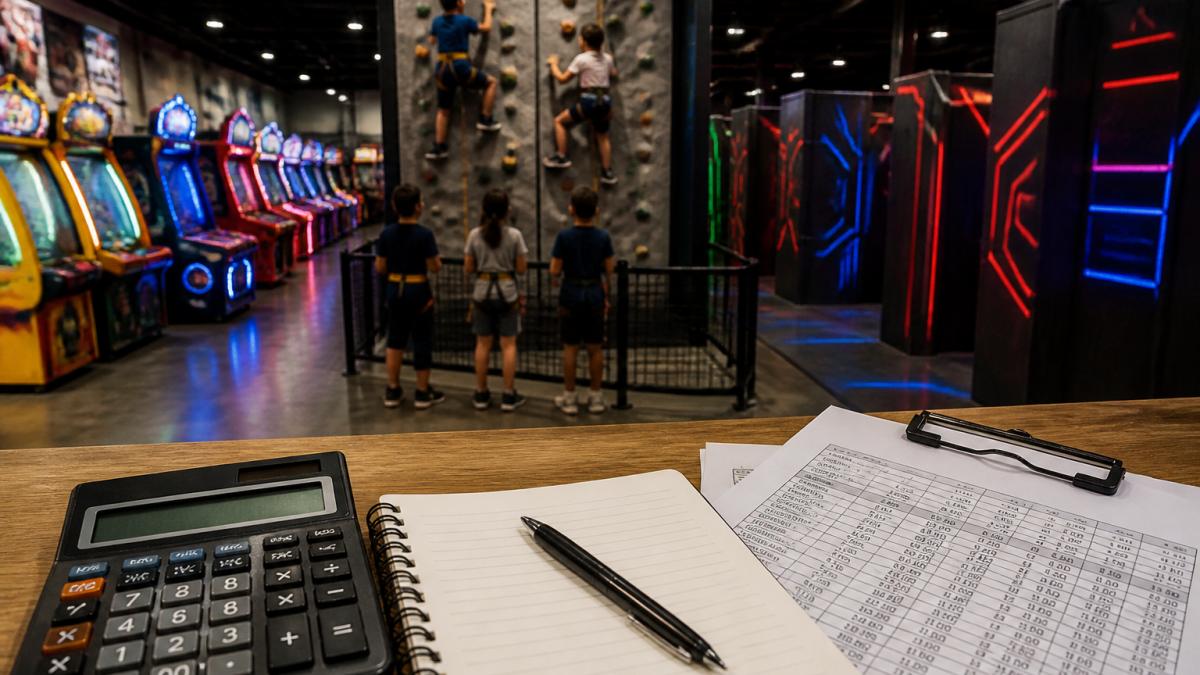
Your actual costs depend on whether you build new or renovate, which attractions you select, local labor and material costs, and how much contingency you build in.
Land, Facility, and Construction
Land acquisition is often the largest single line item in your FEC startup budget.
Construction costs for the FEC shell, walls, flooring, HVAC, electrical, plumbing, and basic infrastructure typically run $75-$150 per square foot depending on local labor rates and building codes.
Interior finishing, paint, lighting, signage, and theming, adds $30-$60 per square foot. Visual appeal directly affects customer perception and pricing power, and families expect modern, well-maintained spaces.
Equipment and Attraction Installation
Your attraction selection is where your FEC differentiates itself and where costs vary most widely. Arcade games range from $2,000 to $8,000 per machine depending on type and condition (new vs. refurbished).
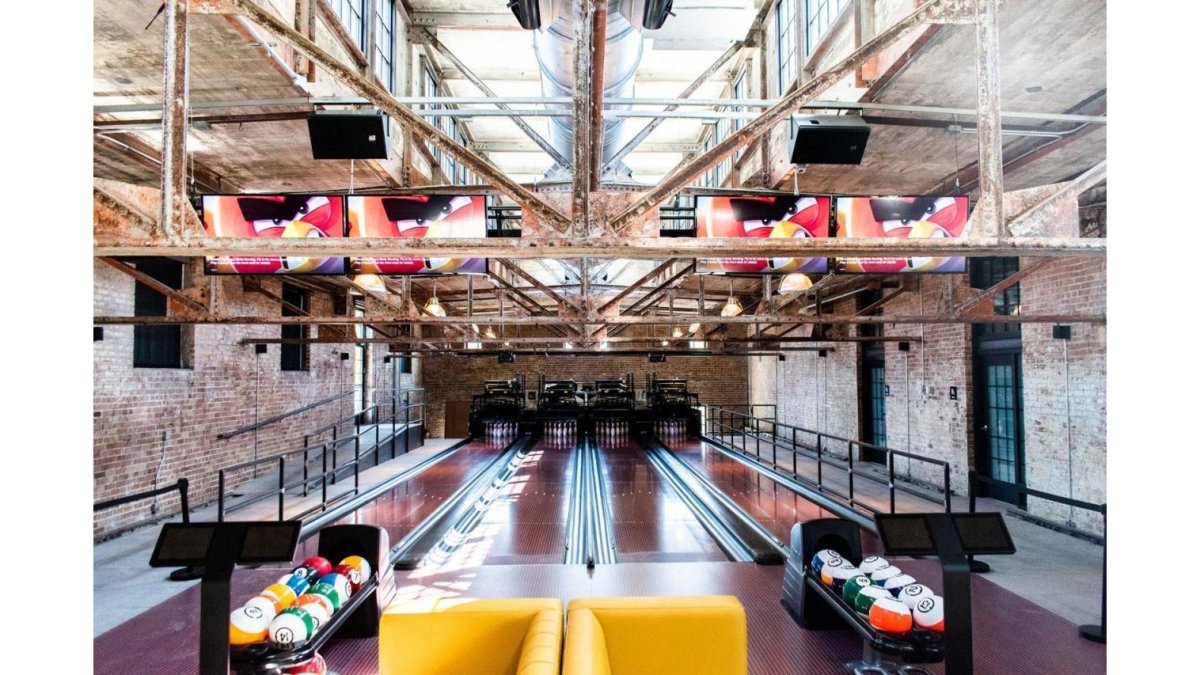
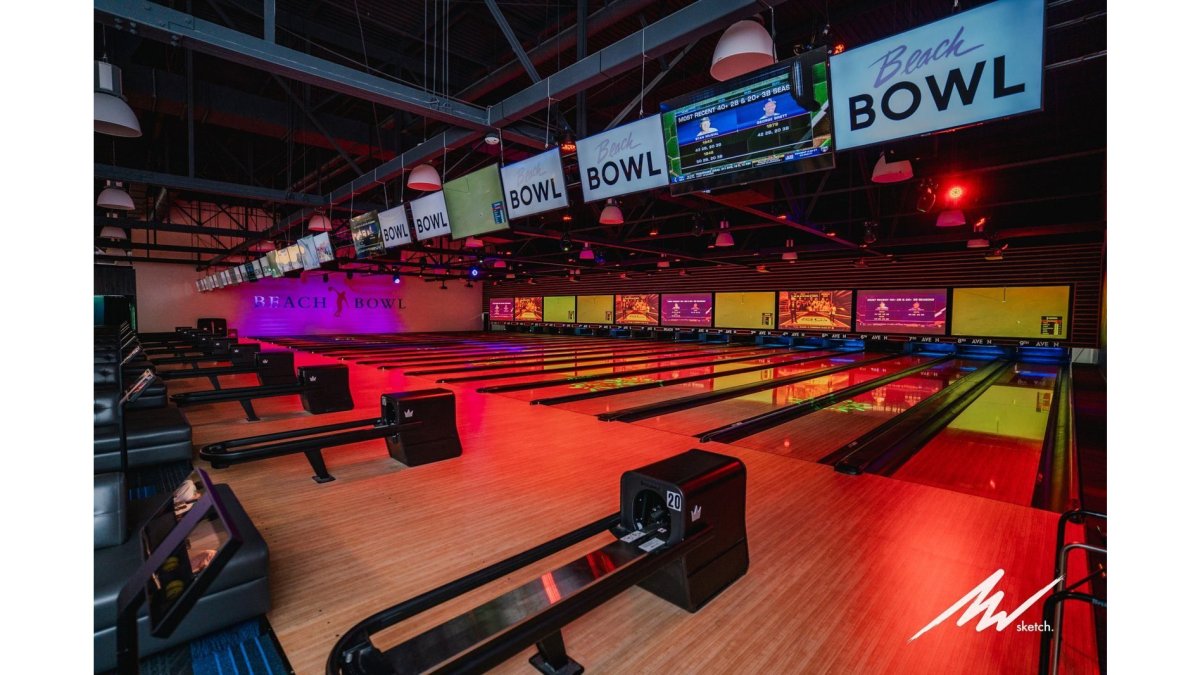
Bowling lanes (if included) cost $40,000 to $60,000 per lane installed. Redemption ticket systems, ticket counters, and prize redemption infrastructure add $30,000 to $75,000.
Plan an attraction mix that serves multiple age groups and visit occasions.
Technology, POS, and Systems
Modern FECs require strong technology infrastructure.
Security camera systems with cloud storage, access control, and monitoring run $20,000 to $50,000. Networking infrastructure, high-speed internet, Wi-Fi coverage, and server hardware, adds $10,000 to $25,000.
Don't skimp on technology. Your systems drive operational efficiency, customer experience, and profitability tracking by revenue stream. Poor POS integration causes revenue leakage and hides which attractions are actually profitable.
Permits, Licenses, and Professional Fees
Permits and licenses are non-negotiable and often underestimated.
Business licenses, food service permits (if you operate food and beverage), and gaming licenses (for arcade) add another $5,000 to $15,000.
Professional fees for architects, engineers, and consultants typically run 8-12% of construction and equipment costs, $160,000 to $240,000 on a $2 million project, covering design, permitting support, project management, and compliance verification.
FEC Working Capital Requirements and Operating Runway
Your FEC startup budget must include working capital, cash on hand to cover operating expenses before the venue reaches cash-flow breakeven.
A typical FEC burns cash for 6-12 months after opening: the customer base builds gradually and early marketing spend is high.
For a mid-size FEC, monthly operating expenses typically range from $30,000 to $50,000 in the early months.
Build in a safety buffer and plan for a slower ramp-up than you expect.
FEC Startup Budget Template and Allocation Strategy
Here's a practical allocation framework for a mid-size FEC startup budget:
| Cost Category | Percentage of Total Budget | Typical Range |
|---|---|---|
| Land/Facility/Construction | 40-50% | $600K-$1.5M |
| Equipment and Attractions | 25-35% | $375K-$1.05M |
| Technology and Systems | 3-5% | $45K-$150K |
| Permits, Licenses, Professional Fees | 5-8% | $75K-$240K |
| Working Capital (6-12 months ops) | 10-15% | $150K-$450K |
| Contingency Buffer (10-15%) | 10-15% | $150K-$450K |
This assumes a $1.5 million to $3 million total budget. For smaller venues, construction represents a larger share; for larger venues, technology and systems a smaller percentage.
The contingency buffer is critical. Construction overruns, permit delays, equipment shortages, and unexpected site conditions are normal. A 10-15% contingency isn't pessimism, it's realism. Projects that underestimate contingency typically run over budget.
FEC Startup Contingency Planning and Risk Buffer
Every FEC startup budget should include explicit contingency planning. Most founders fail here: they create a budget, present it to lenders, then hit unanticipated delays or cost overruns.
Common overrun sources: construction delays (weather, labor, supply chain), permit delays, equipment delays (popular attractions have long lead times), and scope creep from mid-project additions.
Build contingency in three layers: a 10-15% project contingency, a timeline buffer (plan for 20% longer than the contractor estimates), and a working capital buffer (assume slower ramp-up than projected).
Financing Options and Break-Even Analysis for New FECs
Financing an FEC startup budget almost always requires stacking multiple sources. Few lenders fund 100% of a project, and those that will charge for the privilege. The typical capital stack:
Owner equity (20-35% of total project cost). This is the first money in and the last money out. Lenders treat it as the skin-in-the-game signal. For a $2 million project, expect to document $400,000 to $700,000 in equity, which can include cash, contributed land, or verified equipment.
Senior debt (50-70% of hard costs). Bank and commercial real estate loans cover construction, equipment, and permits, the "hard" costs, but not working capital or soft costs.
SBA-guaranteed loans. The Small Business Administration's 7(a) and 504 programs are the most common path for first-time FEC operators.
Landlord contributions and build-out allowances. If you lease, negotiate tenant improvement dollars, rent abatement during construction, and a build-out period before rent commencement, effectively interest-free financing that inexperienced tenants frequently leave on the table.
Break-even mechanics
Break-even analysis for an FEC has two distinct meanings, and conflating them is a common error:
- Operating break-even, the month when monthly revenue covers monthly operating expenses. For most FECs this occurs 6-18 months after opening, depending on market density, marketing spend, and attraction mix.
- Capital recovery, the point when cumulative cash flow repays the initial investment. This is a multi-year horizon, not a monthly one, and it is what equity investors actually care about.
Work the math in that order. Compute monthly operating expenses (payroll, utilities, rent, insurance, maintenance, marketing, cost of goods for food and prizes), then project revenue at three ramp levels, opening month, month six, and steady state.
A simple illustration: if monthly operating expenses are $40,000 and steady-state revenue is $50,000, the venue generates $10,000 per month of operating profit at maturity.
What lenders and investors look for
- A line-item budget with ranges, not single numbers
- A documented contingency reserve (10-15% of project cost)
- A working capital schedule showing 12-18 months of operating expenses
Cost Scenarios by Venue Size and Attraction Mix
Different venue sizes and attraction mixes create vastly different startup budgets. Three realistic scenarios:
Small Urban FEC (3,500 sq ft, Arcade + Climbing Wall + Laser Tag): Estimated startup budget of $800,000 to $1.2 million. Urban land/lease costs are higher, but the compact footprint reduces construction costs and the limited attraction mix keeps equipment costs lower. This model works in high-foot-traffic urban locations that rely on walk-in traffic and local density.
Mid-Size Suburban FEC (10,000 sq ft, Arcade + Bowling + Climbing + Party Spaces): Estimated startup budget of $2 million to $2.8 million.
Large Full-Service FEC (18,000 sq ft, Arcade + Bowling + Climbing + Laser Tag + Food Service + Event Spaces): Estimated startup budget of $4 million to $5.5 million.
Each scenario assumes realistic vendor pricing, standard build quality, and appropriate contingency. Your actual costs depend on location, site conditions, and design choices.
Conclusion
Building an FEC requires meticulous planning of your startup budget. From land and construction through equipment, technology, and working capital, every component affects your ability to launch successfully and reach profitability. A detailed FEC startup budget isn't just a financing requirement, it's your operational blueprint.
At Turfway Entertainment, we help founders and operators build realistic financial models, find cost savings without compromising quality, and secure financing with credible, detailed projections. Whether you're planning your first FEC or expanding an existing operation, our consulting services guide you through every stage of the startup process. Request a consultation to discuss your FEC project with our team and ensure your startup budget reflects both market realities and your long-term profitability goals.
Frequently Asked Questions
How much does it cost to start a family entertainment center in 2026?
Total FEC startup costs typically range from $500,000 to $3 million or more, depending on venue size, location, and attraction mix. A small 5,000-square-foot FEC with basic attractions may cost $500,000-$800,000, while a 15,000-square-foot center with premium rides, food service, and event space can exceed $2 million. Land acquisition, construction, equipment, permits, and working capital are the largest line items. Your specific investment depends on local real estate costs, chosen attractions, and staffing needs.
What are the biggest startup costs for a family entertainment center?
The largest expenses are facility costs (land and construction), which typically represent 40-50% of total investment, and equipment and attraction installation (20-30%). Professional design fees, permits, and licensing add 10-15%. Technology infrastructure, POS systems, and security account for 5-10%. Smaller but essential costs include insurance, initial marketing, and working capital reserves. Prioritizing high-revenue attractions and efficient space design helps control equipment costs.
How much working capital does a new family entertainment center need?
Most FEC startups should reserve 6-12 months of operating expenses as working capital. For a facility with monthly operating costs of $40,000-$60,000, this means $240,000-$720,000 in liquid reserves. Working capital covers payroll, utilities, maintenance, marketing, and food inventory during the ramp-up period when revenue is building. Underfunded working capital is a leading cause of FEC startup failure. Include this reserve in your FEC startup budget template to ensure you can sustain operations until the venue reaches profitability.
What contingency should I include in an FEC startup budget?
Include a contingency reserve of 15-25% of your total project budget for unexpected costs. For a $1.5 million project, this means $225,000-$375,000 in contingency funds. Common overruns include construction delays, equipment price increases, permit and inspection costs, and unforeseen facility repairs. FEC startup contingency planning protects you from project delays that deplete working capital. Separate your contingency from operating reserves; use contingency only for development phase overruns, not ongoing operations.
What financing options are available for a family entertainment center startup?
Common FEC financing includes SBA loans (7(a) program or CDC loans), traditional bank loans, equipment financing, and investor equity. SBA loans typically cover 60-90% of project costs with favorable terms. Equipment financing separates attraction and gaming costs from real estate, often at lower rates. Investors may provide equity in exchange for ownership or revenue share. Lenders require a detailed FEC startup budget breakdown, feasibility study, and personal guarantees. Your choice depends on available equity, credit profile, and willingness to share ownership.
How do I create a startup budget for a family entertainment center?
Start with an FEC startup budget template that organizes costs into categories: land/facility, equipment, technology, permits/professional fees, insurance, and working capital. Research local construction costs and equipment pricing for your chosen attractions. Add 15-25% contingency. Calculate monthly operating expenses (payroll, utilities, maintenance, marketing) and multiply by 6-12 months for working capital. Review your projections with a lender or consultant to identify gaps. Update your budget as you finalize attraction selections and receive construction bids.
How do I estimate construction and equipment costs for an entertainment center?
Request quotes from local contractors for facility build-out based on your design specifications and square footage. Equipment costs vary by attraction: arcade games ($2,000-$8,000 each), climbing walls ($20,000-$50,000), trampolines ($15,000-$30,000), and rides ($50,000-$200,000+). Obtain firm quotes from attraction vendors rather than estimates. Factor in installation labor, electrical upgrades, and safety compliance. Compare cost scenarios by venue size and attraction mix to optimize your budget. Professional designers can help identify cost-efficient layouts that maximize revenue per square foot.
What permits, licenses, and compliance costs should I budget for an FEC startup?
Budget $10,000-$50,000 for permits and licenses, depending on local requirements. This includes building permits, occupancy permits, health department approval, fire safety inspection, amusement ride permits (if applicable), and business licenses. Professional design and engineering fees typically run $15,000-$40,000. Insurance deposits and initial premiums add $5,000-$20,000. Ongoing compliance includes annual inspections and license renewals. Consult your local building department and an entertainment venue attorney early to identify all requirements and avoid costly delays.