 comparison
Buying an Existing FEC vs Building New: 2026 Guide
Table of Contents
- Buying an Existing FEC vs Building New: The 2026 Decision Framework
- Side-by-Side Comparison: Upfront Investment and Timeline
- Family Entertainment Center Startup Costs: Where the Money Goes
- Buying an Existing Entertainment Business: Due Diligence That Protects Your Capital
- FEC Feasibility Study: The Numbers That Decide the Path
- Regulatory, Permitting, and Infrastructure Risks in Both Paths
- FEC Startup Budget Contingency Planning: Protecting Against Overruns
- ROI and Payback Modeling: Which Path Returns Capital Faster?
- Frequently Asked Questions
Last Updated: October 7, 2026
Buying an Existing FEC vs Building New: The 2026 Decision Framework
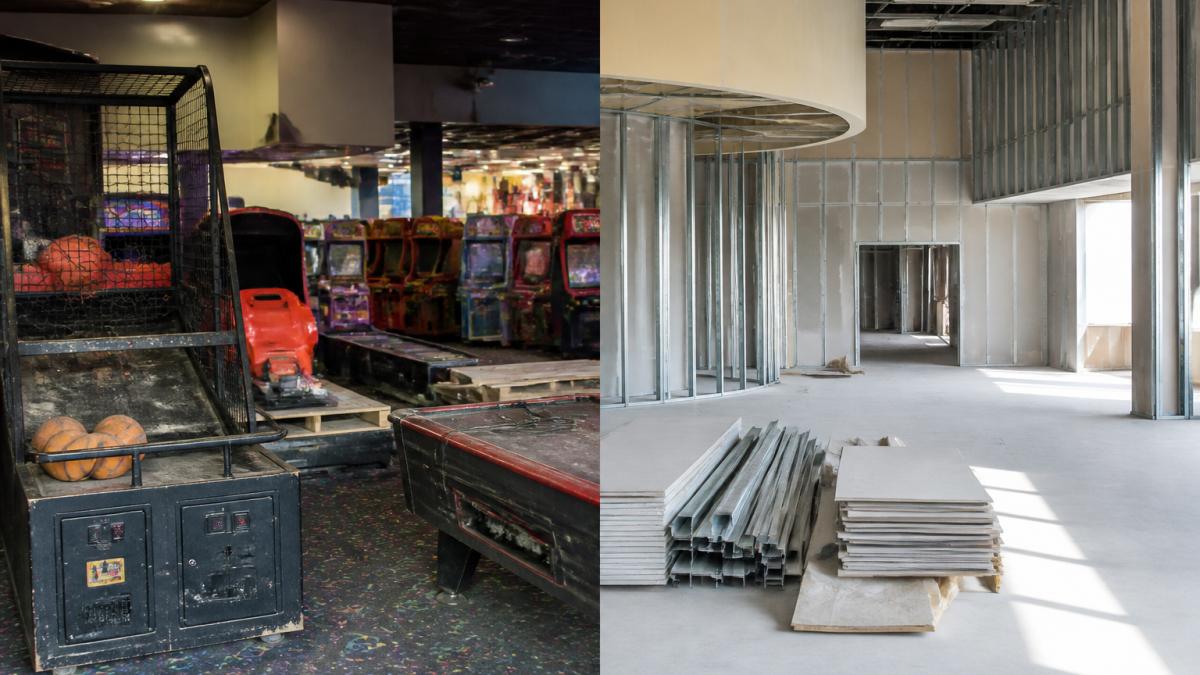
Choosing between buying an existing FEC vs building new is the single most consequential capital decision a family entertainment center operator will make. One path trades money for speed; the other trades speed for control.
Here is the core tension. A ground-up build gives you a facility designed around current equipment and current guest expectations. An acquisition gives you revenue on day one, but you inherit someone else's layout, someone else's maintenance backlog, and someone else's lease terms.
Below, we break down upfront investment, timeline, due diligence, regulatory exposure, and payback modeling so you can decide with numbers instead of instinct.
Side-by-Side Comparison: Upfront Investment and Timeline
The two paths diverge fastest on capital and calendar, and the divergence is not just about size, it is about when money leaves your account and when revenue starts replacing it. A new build concentrates spending into land, site work, construction, and equipment before a single guest walks in. An acquisition concentrates spending into purchase price and immediate transition costs, then spreads improvement spending over the first year or two.
| Factor | Buying an Existing FEC | Building New |
|---|---|---|
| Capital timing | Lump sum at close, plus a renovation draw | Drawn down over construction, interest-only during build |
| Revenue start | Near-immediate, but often at reduced capacity during rebrand | After build-out, permitting, and certificate of occupancy |
| Customization | Limited by existing footprint, ceiling height, and utility service | Full control of layout, guest flow, and attraction mix |
| Legacy risk | Equipment, POS, and infrastructure debt | Design, cost-overrun, and schedule risk |
| Financing basis | Business valuation and trailing cash flow | Project pro forma and appraisals |
| Permitting exposure | Change-of-use and re-inspection of existing systems | Full zoning, building code, and ADA review from scratch |
| Depreciation posture | Shorter remaining useful life on inherited assets | Full depreciable basis on new construction and equipment |
Capital Requirements and Financing Paths
Acquisition financing leans on the existing business's cash flow, so lenders underwrite the trailing financials and the property appraisal. New construction financing leans on your project pro forma, which means lenders scrutinize the feasibility study and the contractor's budget. In practice, acquisition deals close faster because there is a revenue history to underwrite.
A pattern worth flagging: acquisition lenders often want to see that the seller's reported revenue can be verified through a modern point-of-sale or revenue management system.
Time to Opening: Ground-Up Build vs Acquisition Close
A ground-up build typically runs from site selection through permitting, construction, and equipment installation before opening day. An acquisition can close in a fraction of that time, but the real clock starts after closing, when you address deferred maintenance and rebrand. The mistake we see most often is assuming an acquisition means opening tomorrow.
The calendar risk is asymmetric. On a new build, a permitting delay pushes every downstream milestone. On an acquisition, a change-of-use or re-inspection finding can force you to close the doors you just paid for until the fix is signed off. Build the schedule around the risk you are actually carrying.
Family Entertainment Center Startup Costs: Where the Money Goes
Family entertainment center startup costs fall into four buckets: real estate, attractions and equipment, build-out and leasehold improvements, and working capital. On a new build, real estate and construction dominate. On an acquisition, the purchase price absorbs most of the budget, but renovation costs and utility upgrades can surprise you. The mistake is treating the buckets as interchangeable between paths, they are not, and the line items inside them shift depending on whether you are pouring concrete or inheriting someone else's.
- Real estate: purchase or long-term lease, plus site work, parking, and stormwater management on a new build; on an acquisition, assume the existing lease terms, CAM charges, and any personal guarantee the seller negotiated
- Attractions and equipment: arcade, climbing, laser tag, soft play, redemption, on a new build you specify; on an acquisition you inherit, and you should price a full equipment lifecycle audit before you sign
- Build-out: leasehold improvements, ADA accessibility, safety compliance, and, on an acquisition, the change-of-use work that turns a former retail box or big-box tenant space into a compliant FEC
- Working capital: payroll, inventory, marketing, and a contingency reserve sized to the risk profile of your path
The Line Items Competitors Skip
Most startup-cost breakdowns stop at the four buckets. The FEC-specific line items that actually move the number are the ones that live between them:
- ADA compliance retrofits. A new build designs accessibility in from the start. An acquisition may require path-of-travel corrections, restroom upgrades, and accessible route work that a residential-style inspection would never surface.
- Utility service capacity. Arcades, laser tag, and commercial kitchens draw far more power than the retail or restaurant tenant that previously occupied the space. An undersized electrical service is a six-figure surprise, not a line item.
- Fire suppression and egress. Attractions with enclosed spaces, dark rides, or high-occupancy event rooms trigger sprinkler, alarm, and egress requirements that a general contractor on a residential project will not flag.
- Technology and POS replacement. Legacy point-of-sale, card systems, and network infrastructure often cannot support modern cashless revenue management, and replacing them is a capital cost, not an operating one.
- Signage, wayfinding, and brand. Frequently underestimated on acquisitions because the previous brand's identity is baked into the building.
Sizing the Numbers to Your Path
Rather than quoting a single startup figure, which would be misleading across markets and formats, build the budget from the bottom up. For a new build, the dominant variables are land cost, square footage, and attraction mix. For an acquisition, the dominant variables are purchase price, deferred maintenance, and modernization scope.
A practical approach: build the budget in three layers. Layer one is the committed cost (purchase price or construction contract). Layer two is the known-but-unpriced work (audits, inspections, and the fixes they will almost certainly surface). Layer three is contingency, sized as a percentage of total project cost rather than a flat figure.
Buying an Existing Entertainment Business: Due Diligence That Protects Your Capital
Buying an existing entertainment business due diligence is where acquisitions are won or lost. The purchase price is the easy number to negotiate; the real cost lives in what you cannot see from the arcade floor. We structure due diligence around three audits, and we recommend no acquisition closes without all three.
Financial, Operational, and Physical Audits
The financial audit verifies revenue, operating expenses, and cash flow against tax returns and bank statements, not just the seller's summary. The operational audit examines staffing, food and beverage margins, event sales, and pricing. The physical audit inspects equipment lifecycle, facility maintenance records, structural integrity, and safety compliance. A cashless revenue management system can help verify actual performance rather than reported performance, which matters when you are pricing a business valuation.
FEC Feasibility Study: The Numbers That Decide the Path
An FEC feasibility study answers one question: can this specific market support this specific facility? It covers demographics, competitive saturation, site selection, and projected revenue per square foot. For a new build, the study justifies the investment to lenders. For an acquisition, it tests whether the existing business is priced fairly against what the market can actually support.
We treat the feasibility study as the decision gate. If the numbers do not clear your break-even analysis, no amount of customization potential or brand equity rescues the project. This is also where ROI analysis begins, because the study's revenue projections feed directly into your payback model.
Regulatory, Permitting, and Infrastructure Risks in Both Paths
Regulatory exposure looks different on each path, and this is where most comparison guides stop short. A new build faces the full permitting process: zoning regulations, building codes, ADA accessibility requirements, and safety compliance sign-offs.
Technology and infrastructure debt is the hidden risk in acquisitions. Legacy point-of-sale systems, aging HVAC, and undersized utility service all become your problem at closing. A new build avoids inherited debt but carries design risk: if you misjudge guest flow or attraction mix, you live with it for years.
FEC Startup Budget Contingency Planning: Protecting Against Overruns
FEC startup budget contingency planning is the discipline that separates projects that open on schedule from projects that stall. We recommend holding a reserve sized to the risk profile of your path. New builds should reserve against construction change orders and permitting delays. Acquisitions should reserve against deferred maintenance discovered after closing.
- Set contingency as a percentage of total project cost, not a flat figure
- Identify the three most likely overrun sources for your path
- Hold the reserve in cash, not in a line of credit you may not draw
- Revisit the reserve at each major milestone
- Define the trigger that pauses spending if the reserve drops below threshold
ROI and Payback Modeling: Which Path Returns Capital Faster?
ROI and payback modeling is where the decision usually resolves. Model both paths on the same timeline and the same revenue assumptions so the comparison is honest.
Run three scenarios: conservative, base, and optimistic. If the acquisition only clears your hurdle rate in the optimistic case, the price is too high. If the new build fails the conservative case, the scope is too large for your capital position.
The challenge is not choosing a path. It is modeling both paths honestly before you commit capital, and that is exactly where most operators get stuck.
Frequently Asked Questions
Is it cheaper to buy an existing FEC or build a new one?
It depends on the market and the condition of the asset. Buying an existing FEC usually requires less upfront investment because the building, attractions, and customer base are already in place. Building new gives you full control over layout and equipment but adds land, construction, and permitting costs. A feasibility study comparing both paths against your local market is the only way to know which is cheaper for your situation.
What should I inspect before buying an existing FEC?
Focus your due diligence on financial records (three years of tax returns and POS data), attraction equipment age and maintenance logs, lease terms or property title, safety compliance records, and ADA accessibility status. Also review staff turnover and any pending litigation. A qualified consultant can audit the operation and flag legacy infrastructure or deferred maintenance that will affect your renovation budget.
How long does it take to build a family entertainment center?
A ground-up FEC typically takes 12 to 24 months from site selection to opening, depending on zoning, permitting, and construction schedules. Buying an existing facility can close in 60 to 120 days if financing and due diligence move smoothly. Renovations to an acquired FEC may add several months before opening, so factor that into your timeline and cash flow planning.
What costs should be included in an FEC startup budget?
Your FEC startup budget should cover site acquisition or lease, construction or renovation, attraction and arcade equipment, POS and cashless systems, furniture and fixtures, initial inventory, staffing and training, marketing, and working capital for the first six months. Add a contingency line of at least 10 to 15 percent for permitting delays, utility upgrades, and unexpected repairs, especially when buying an older facility.
Can you renovate an existing FEC to match a new concept?
Yes, but the scope depends on structural integrity, ceiling heights, power capacity, and ADA compliance. Cosmetic updates are straightforward; moving walls or adding heavy attractions may require permits and utility upgrades. A feasibility study and a fit-out cost estimate will show whether renovation delivers the experience you want at a lower cost than building new.