 how-to
Improve Food and Beverage Profitability: 7 Actionable Strategies
Table of Contents
- Why Food and Beverage Profitability Matters for Your Entertainment Venue
- Strategy 1: Control Food Cost Percentage Through Purchasing and Supplier Management
- Strategy 2: Reduce Food Waste and Spoilage Through Inventory Management
- Strategy 3: Optimize Profitability With Menu Engineering
- Strategy 4: Increase Revenue Through Upselling Food and Beverages
- Strategy 5: Improve Operational Efficiency and Labor Costs
- Strategy 6: Monitor and Measure Food and Beverage Profitability
- Strategy 7: Prioritize Actions by Business Type and Scale
- Frequently Asked Questions
Last Updated: October 17, 2026
Why Food and Beverage Profitability Matters for Your Entertainment Venue
Food and beverage profitability is the difference between a thriving entertainment venue and one that barely survives.
Food and beverage margins can reach 60-70% when managed correctly, versus 30-40% for arcade machines. Your food program isn't a side business.
Food and beverage operations are complex: inventory, labor, waste, pricing, and customer experience all at once.
This guide covers seven strategies to improve food and beverage profitability, each addressing a specific lever: cost control, waste reduction, menu optimization, revenue growth, operational efficiency, measurement, and prioritization by business type.
Strategy 1: Control Food Cost Percentage Through Purchasing and Supplier Management
Your food cost percentage is the foundation of food and beverage profitability: divide food costs by food revenue. Most entertainment venues target 28-32%. Anything higher eats into your margin.
The fastest way to improve this metric is controlling what you pay for ingredients: negotiate better prices and track what you actually spend.
Negotiate volume discounts and build supplier relationships
Start by auditing your suppliers: write down every vendor you use and what you pay.
Call your suppliers, tell them you're reviewing purchasing, and ask about volume discounts.
Build relationships with 2-3 primary suppliers instead of many small ones.
Consider joining a restaurant co-op or group purchasing organization, which aggregates orders from many venues to negotiate better pricing.
Track and benchmark your food cost percentage against industry standards
You can't improve what you don't measure. Calculate your food cost percentage weekly. Compare it to your target and to industry benchmarks.
The formula is straightforward:
Food Cost % = (Beginning Inventory + Purchases - Ending Inventory) / Food Revenue
Track this by category when possible.
Benchmark against similar venues: full-service entertainment centers typically run 30-32% food cost, quick-service venues 25-28%. Know which category you're in and what's realistic for your model.
Strategy 2: Reduce Food Waste and Spoilage Through Inventory Management
Food waste is invisible profit loss. A piece of chicken that spoils before service is 100% cost with zero revenue. Most venues waste 4-8% of their food purchases. That's money in the trash.
Reducing waste improves food and beverage profitability directly. You spend less on inventory. Your margins improve immediately.
Implement FIFO (First In, First Out) and track expiration dates
FIFO is simple in theory, hard in practice: older stock gets used before newer stock, preventing spoilage and keeping inventory fresh.
Implement FIFO physically:
- Date everything when it arrives. Use a permanent marker on containers.
- Store older items in front. Newer items go to the back.
- Train staff to check dates before grabbing ingredients.
Use a simple spreadsheet or inventory app to track expiration dates. Many venues skip this step. They rely on staff memory.
For perishables like produce and proteins, order smaller quantities more frequently.
Spoiled food doesn't just hurt your margin. It can create health code violations and damage your reputation. One customer who gets sick from old food will tell 20 people. That's not a cost you can measure on a spreadsheet.
Use portion control to minimize waste and standardize costs
Portion control serves two purposes: it reduces waste and standardizes costs so you can price accurately.
Define standard portions for every item. Use scales, scoops, or pre-portioned containers. Train staff to follow these portions consistently.
Standardized portions give you three benefits:
- Lower waste: Staff know exactly how much to use. They don't over-portion.
- Predictable costs: You know your cost per serving. You can price confidently.
- Better customer experience: Customers get consistent products every visit.
When portions are random, you waste food. A server who portions generously uses 30% more product than the standard.
Strategy 3: Optimize Profitability With Menu Engineering
Menu engineering means analyzing which items drive profit and which don't, then adjusting pricing and positioning to emphasize the winners.
Most venue owners design menus by instinct, adding items they think customers want without looking at profit data. That's a missed opportunity to improve food and beverage profitability significantly.
Analyze which menu items drive profit margin versus volume
Create a simple spreadsheet with every menu item. Include:
- Item name
- Menu price
- Food cost
This spreadsheet tells you everything. Some items are high-margin but sell rarely; others are low-margin but sell constantly. Find the winners: high-margin items that also sell well.
Focus on total profit, not just margin percentage: a 60% margin item selling 5 times per week generates less profit than a 40% margin item selling 50 times per week.
Identify your:
- Stars: High margin + high volume. Promote these.
- Dogs: Low margin + low volume. Consider removing these.
- Plowhorses: Low margin + high volume. Raise prices carefully or reduce costs.
Most menus have 20-30% of items that lose money or barely break even. Removing them simplifies operations and improves profitability.
Adjust pricing and positioning to highlight high-margin products
Once you know your winners, use menu positioning to promote them. Place high-margin items at eye level.
Raise prices on your stars gradually. A 10% price increase on a high-demand item usually doesn't reduce volume.
For low-margin items, you have options:
- Raise the price and accept lower volume
- Reduce the cost by changing suppliers or portion size
- Remove the item entirely
Don't be afraid to remove items. A smaller menu is easier to execute. Your kitchen staff works faster.
Strategy 4: Increase Revenue Through Upselling Food and Beverages
Upselling is the simplest way to increase revenue without spending more on marketing. You're already serving the customer. You're just asking them to buy more.
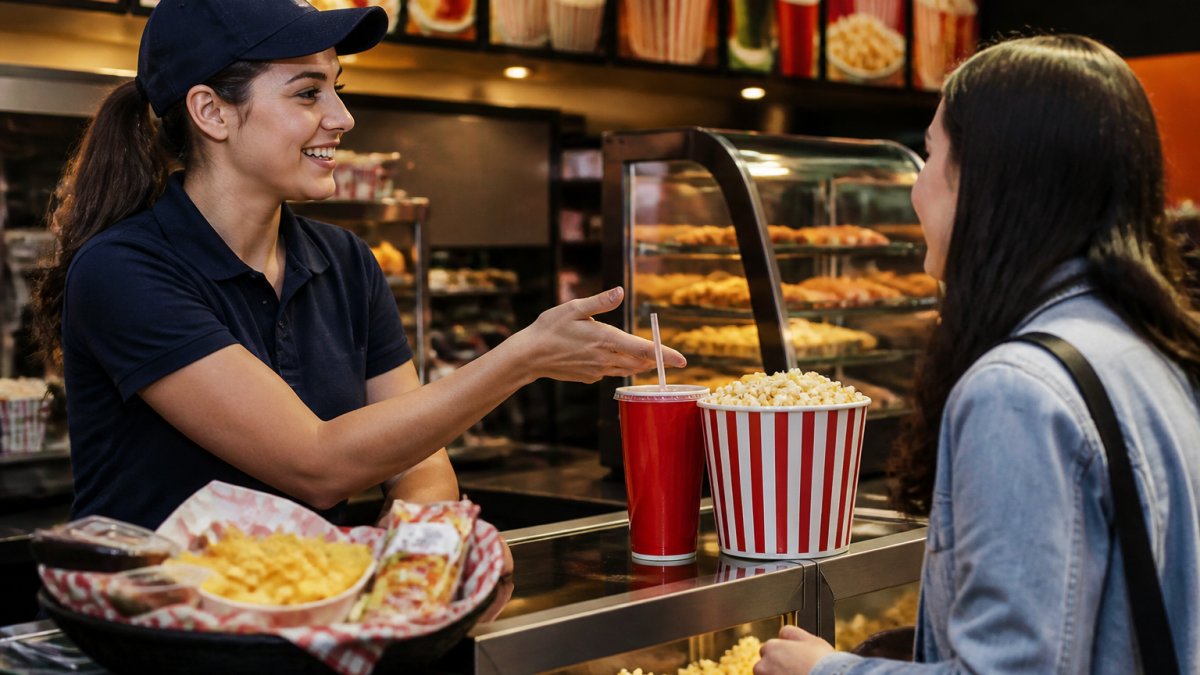
With smart upselling, revenue can increase from the same customer traffic.
Train staff to recommend add-ons and premium items
Your staff is your sales force. Most venue staff don't upsell. They take orders and move on.
Train staff on three upselling techniques:
1. Suggest a drink with food orders
- Customer buys a pizza. Staff asks: "What can I get you to drink?"
- 70% of customers will add a drink if asked directly.
2. Offer an upgrade
- Customer orders a small drink. Staff says: "A large is just $1 more."
3. Recommend a premium item
- Customer orders a basic burger. Staff mentions: "Our loaded burger has bacon and cheese for $2 more."
Make these suggestions natural, not pushy. Train staff to smile and ask genuinely. Role-play different scenarios.
Track average transaction value weekly. Set targets. Celebrate when staff hit them. This creates accountability and motivation.
Bundle items and use strategic pricing to boost transaction value
Bundling is powerful. It increases transaction value and simplifies ordering.
Create 3-4 meal bundles:
- Kid's bundle: Small drink + small food item + treat
- Family bundle: 2 entrees + 2 drinks + shared side
- Premium bundle: Entree + drink + dessert + upgrade
Price bundles 10-15% lower than à la carte. Customers feel they're getting a deal. You increase transaction value and margin.
Use strategic pricing to encourage higher-margin choices:
- Small drink: $3
- Large drink: $4 (customer sees it as better value)
- Small fries: $2.50
The cost difference is minimal. The perceived value is huge. Customers upgrade.
Strategy 5: Improve Operational Efficiency and Labor Costs
Labor is typically your second-largest expense after food costs. A venue might spend 25-35% of revenue on labor. Even small efficiency gains add significant profit.
Simplify kitchen workflows and reduce prep time
Map your current kitchen workflow. Watch your staff work. Where do they waste time? Where do bottlenecks happen?
Common issues:
- Ingredients stored far from prep stations
- Multiple staff reaching for the same items
- Unclear prep procedures
Fix these:
- Organize your kitchen by workflow. Put frequently used items within arm's reach.
- Create a prep checklist. Staff complete it before service.
- Use batch cooking. Prep proteins and vegetables in bulk during slow periods.
A reduction in average order time means you serve more customers with the same staff. That's pure profit.
Schedule staff based on demand forecasting
Most venues schedule the same staff every shift. That's inefficient. You're overstaffed during slow periods and understaffed during rushes.
Track your customer traffic by day and hour. Identify patterns:
- Tuesday lunch: 40 customers
- Friday night: 200 customers
- Saturday afternoon: 150 customers
Schedule more staff for high-traffic times. Reduce staff during slow periods. This is basic, but most venues don't do it.
Use demand forecasting tools or a simple spreadsheet. Plan staffing two weeks in advance. Give staff predictable schedules.
Strategy 6: Monitor and Measure Food and Beverage Profitability
You can't improve what you don't measure. Weekly monitoring keeps you accountable and lets you adjust quickly when something goes wrong.
Calculate gross margin, net margin, and EBITDA margin by category
Understand these three metrics:
| Metric | Formula | What It Means |
|---|---|---|
| Gross Margin | (Revenue - Food Cost) / Revenue | Profit before labor and overhead |
| Net Margin | (Revenue - All Costs) / Revenue | True profit after everything |
| EBITDA Margin | (Profit + Interest + Taxes + Depreciation + Amortization) / Revenue | Operational profitability |
Calculate these weekly for your entire food and beverage operation. Then calculate them by category (entrees, drinks, desserts, etc.).
This reveals which categories are profitable and which are dragging you down. A drink category might run 75% margin. Your entree category might run 35% margin. That tells you where to focus.
Review performance weekly and adjust tactics quickly
Create a simple dashboard:
- Food cost percentage (target: 30%)
- Labor cost percentage (target: 28%)
- Average transaction value (target: $12)
Review these numbers every Monday morning. Compare to your targets. If you're off, ask why. Make adjustments immediately.
If food cost is running high, review your purchasing. If labor cost is high, look at scheduling. If waste is high, check your FIFO system. Small problems get big fast if you ignore them.
Strategy 7: Prioritize Actions by Business Type and Scale
Not every strategy works equally for every venue. A startup FEC has different constraints than an established venue. Prioritize actions that fit your situation.
Startup FECs: focus on waste reduction and labor efficiency first
You're bootstrapped. You don't have money to waste. Your priorities:
- Reduce waste first. Implement FIFO and portion control immediately. Every dollar saved is profit.
- Optimize labor. Schedule based on demand. Cross-train staff. Reduce prep time.
- Track food cost percentage. Know your numbers weekly. Adjust suppliers if you're running high.
- Keep the menu small. 15-20 items, not 50. Easier to execute. Lower waste.
Menu engineering and upselling come later, once you have the basics dialed in.
Established venues: prioritize menu engineering and upselling
You have systems in place. You know your numbers. Your priorities:
- Optimize your menu. Remove low-margin items. Promote winners.
- Train staff on upselling. This generates immediate revenue with no additional cost.
- Refine pricing. Use strategic pricing and bundling to increase transaction value.
- Invest in technology. POS systems that track profitability by item. Inventory management software.
You have the luxury of focusing on optimization rather than firefighting.
Improving food and beverage profitability requires focus on multiple levers: cost control, waste reduction, menu optimization, and revenue growth. Our operational health checks identify exactly where your food and beverage program is leaking profit. We then guide you through implementation, ensuring your team executes the changes that matter most. Request a Consultation to discuss your specific venue and discover which of these seven strategies will have the biggest impact on your profitability.
Frequently Asked Questions
What is a good food and beverage profit margin for an entertainment venue?
Healthy gross margins for food and beverage typically range from 60-70%, meaning your food cost should be 30-40% of revenue. Net profit margins (after labor and operating costs) often fall between 10-20% depending on your venue type and labor efficiency. Track your gross margin, net margin, and EBITDA margin separately to understand where money is actually going. If your margins fall below these benchmarks, prioritize food cost reduction and waste elimination first.
How do you calculate food cost percentage?
Divide your total food costs by your total food and beverage revenue, then multiply by 100. For example, if you spent $3,000 on food in a week and generated $10,000 in F&B sales, your food cost percentage is 30%. Track this metric weekly and compare it to your target. Most venues aim for 28-35% depending on menu mix. Monitor food cost percentage by category (pizza vs. beverages, for example) to identify which products are dragging down profitability.
How can inventory management reduce food waste and improve profitability?
Implement FIFO rotation, set par levels for each item, and conduct inventory counts at least weekly. Use portion control standards to prevent over-serving and standardize costs. Track spoilage and expired items separately to identify problem areas. Demand forecasting based on historical sales helps you order the right quantities, reducing both dead stock and emergency orders at premium prices.
What menu engineering changes typically improve profitability the most?
Analyze each menu item's food cost, selling price, and sales volume to identify your profit drivers. High-margin, high-volume items (stars) should be prominently featured and priced strategically. Low-margin items that sell well may need price increases or recipe adjustments. Consider removing or repositioning dead stock items that tie up cash without generating profit. Bundling high-margin items with popular low-margin ones can boost overall profitability without sacrificing customer satisfaction.