 how-to
Avoiding Cost Overruns in Entertainment: 7 Steps
Last Updated: October 23, 2026
Quick Summary
Avoiding cost overruns in entertainment requires defining scope upfront, building accurate budgets with detailed line items, establishing contingency reserves by risk, implementing formal change management, and tracking committed costs weekly alongside actual spending. These seven steps prevent scope creep, vendor surprises, and labor spikes from derailing your project budget.
- Organize entertainment venue budgets into specific categories: structural work, rides, equipment, food infrastructure, décor, and safety compliance.
- Size contingency reserves at 10-15% for well-planned projects and 15-20% for higher-uncertainty projects, then layer risk-specific reserves on top.
- Track four numbers per line item: budget, committed costs, actual invoices, and forecast-to-complete, not just budget versus actuals.
- Require written change orders before any work begins and price significant changes independently when they exceed 5% of contract value.
- Escalate any line item forecast to exceed budget by 10% or more to the project owner immediately for corrective action.
Table of Contents
- What Causes Cost Overruns in Entertainment Projects
- Step 1: Define Scope and Prevent Scope Creep
- Step 2: Build an Accurate Entertainment Venue Construction Budget Template
- Step 3: Establish Contingency Planning for Entertainment Venues
- Step 4: Implement Formal Change Management and Managing Contractor Change Orders
- Step 5: Monitor Costs and Track Budget Performance in Real Time
- Step 6: Manage Vendor Contracts and Risk Mitigation
- Step 7: Execute Corrective Action When Actual Costs Exceed Budget
- Frequently Asked Questions
What Causes Cost Overruns in Entertainment Projects
Cost overruns happen when actual spending exceeds your planned budget, a common threat in entertainment venues, from family entertainment centers to live event spaces.
At Turfway Entertainment, we've seen projects derail because teams underestimated contingency planning.
The good news: avoiding cost overruns is within your control if you follow a structured process. The seven steps below show you how.
Step 1: Define Scope and Prevent Scope Creep
Scope definition is your first line of defense against budget overruns. If you don't know exactly what you're building, you can't accurately estimate what it costs.
Write down every deliverable: rides, games, food stations, restrooms, offices, storage.
Document assumptions in writing, who handles permits, utilities, and décor/theming, and get stakeholder sign-off before work begins.
Once construction starts, every change request must go through formal change management (Step 4), preventing the drift where "just one small addition" becomes 15 and your budget explodes.
Common scope creep triggers to watch for:
- Stakeholders requesting features after planning is done
- Discovering existing site conditions that demand design changes
- Permit requirements that force redesigns mid-project
Step 2: Build an Accurate Entertainment Venue Construction Budget Template
An accurate budget is built on line-item detail, not guesswork. Generic construction budgets miss the specific cost drivers in entertainment venues.
Organize costs into major categories, then break each into line items for visibility and easier tracking as the project progresses.
Key Line Items for Entertainment Venues
Rides and attractions are typically your largest expense: equipment, installation labor, electrical connections, and safety certifications.
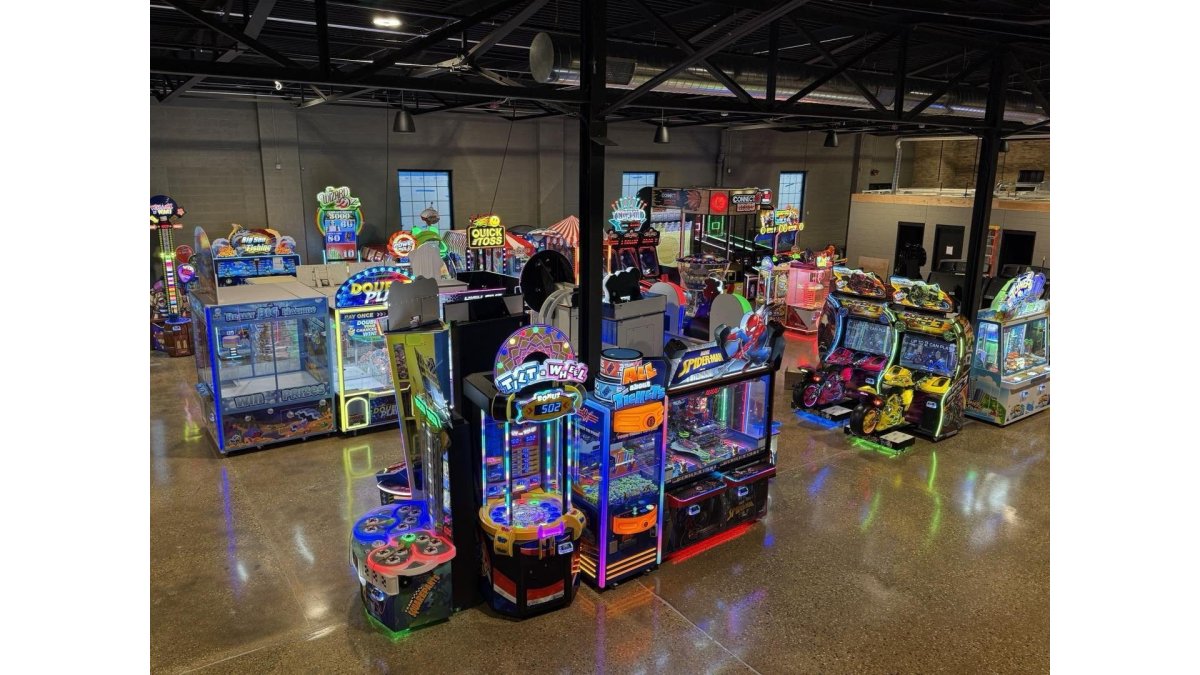
Game and entertainment equipment includes arcade cabinets, ticket redemption systems, LED displays, sound systems, and lighting.
Décor, theming, and finishes create the atmosphere that justifies admission prices: paint, flooring, wall treatments, signage, and themed elements.
Safety and compliance includes emergency exits, ADA modifications, fire suppression, and safety railings.
Estimating Labor and Union Considerations
Labor costs are often underestimated because teams miss union requirements, overtime, or specialized skills.
In a union jurisdiction, labor costs exceed non-union rates. Electricians, plumbers, and ironworkers have union scales, get actual wage rates for your area, don't estimate.
If your timeline is tight, expect 10-20% of labor hours to be overtime at time-and-a-half rates.
Specialized skills cost more, ride installation requires certified technicians at premium rates.
Step 3: Establish Contingency Planning for Entertainment Venues
Contingency reserves are insurance against unexpected costs. But a single blanket percentage is the wrong tool: a film, a live event, and a family entertainment center each carry different risk profiles, so the reserve should be sized and released to match.
Size Contingency by Risk, Not by Habit
Start with a base reserve of 10-15% of total project budget for well-planned projects, and 15-20% for higher-uncertainty projects (renovations, complex sites, tight timelines). That base is only the floor, layer risk-specific reserves on top:
- Production schedule risk (film, television, live events): weather days, talent availability, and location access can compress or extend the schedule. Reserve for day-rate extensions and idle crew, not just materials.
- Reshoot and rework risk (film, television): even disciplined productions budget a reshoot allowance. Size it against the number of shoot days and the cost per day, not as a flat percentage.
- Technical and installation risk (venues, games, live events): ride certification, rigging, network commissioning, and load-in/load-out overruns are common. Reserve for specialty labor and re-inspection.
Allocate Contingency by Phase
Assign contingency to the phases where risk lives, and release it only when the triggering risk has passed:
- Pre-production and design: a small reserve for redesign and re-estimating. Release when drawings are approved.
- Procurement and fabrication: reserve for price escalation and lead-time slippage. Release when purchase orders are locked and delivered.
- Production, construction, or load-in: the largest reserve, tied to schedule and labor risk. Release as milestones are hit.
This lets you tell stakeholders exactly how much reserve remains and what it still protects against.
Keep Contingency Separate and Track Every Draw
Keep contingency separate from your base budget, once spent, it's gone. Document what triggered each draw (change order, weather day, permit condition, vendor price increase). That log becomes your estimating history and defense when a stakeholder asks why the reserve is shrinking.
Reconcile Contingency Monthly
At each monthly cost review, report original contingency, spent to date, and remaining as a percentage of remaining work. If remaining contingency falls below the risk still ahead, that's an early overrun warning.
Step 4: Implement Formal Change Management and Managing Contractor Change Orders
Change orders are where budget discipline breaks down. Without formal change management, small requests accumulate into massive overruns.
Establish a written change control process before work begins. Every change, no matter how small, must be documented, priced, and approved before work starts, including:
- A written description of the change
- Cost impact (materials and labor)
- Schedule impact (does it delay completion?)
When a contractor submits a change order, don't approve it immediately. Get independent pricing for significant amounts and compare to similar work elsewhere on the project, a first quote is often high, testing what you'll accept.
Document the reason for each change, scope creep, unforeseen site condition, or permit requirement, to identify patterns and prevent similar changes on future projects.
Managing contractor change orders effectively:
- Require written change orders before any work begins
- Price changes independently when amounts exceed 5% of contract value
- Track all changes in a central log with approval dates and costs
Step 5: Monitor Costs and Track Budget Performance in Real Time
Real-time cost tracking is the difference between catching overruns early and discovering them too late to correct course. In entertainment work, money is committed long before it's invoiced: purchase orders, vendor holds, talent deals, equipment rentals, and location agreements lock in cost weeks or months ahead of payment.

Track Four Numbers, Not One
A budget-versus-actuals spreadsheet misses most of the risk. For each line item, track four numbers:
- Budget: the approved amount for the line.
- Committed: the value of signed purchase orders, contracts, holds, and approved change orders, whether or not invoiced.
- Actual: invoices received and approved to date.
The gap between committed and actual is where entertainment overruns hide: a vendor hold on a location or a camera rental is a cost you've already taken on, even with no invoice.
Build a Weekly Reconciliation Workflow
Set up the system before work begins. A spreadsheet with budget, committed, actual, and forecast columns per line item is enough to start; production accounting and project-cost software can scale it later. Run this cycle weekly:
- Collect: pull new purchase orders, contracts, holds, and invoices into the tracker.
- Match: tie each invoice to its purchase order or contract line. Flag unmatched invoices for review before approval.
- Update forecast: revise the forecast-to-complete for any line where scope, schedule, or vendor pricing has changed.
- Calculate variance: compare forecast final cost to budget for every line, not just the ones already invoicing.
- Escalate: any line forecast to exceed budget by a set threshold (for example, 10%) goes on an exception list for the project owner.
Use Variance and Earned-Value Signals
Track cost performance by category and phase to see which areas are forecast over or under, that shows where estimates were weakest and where remaining contingency should be held back. For larger productions, earned-value measures such as cost performance index (CPI = earned value divided by actual cost) give an early read: a CPI below 1.0 means you're spending faster than you're earning progress, and the final cost forecast should be revised upward.
Forecast Final Cost Continuously
Don't wait for the final report to forecast the final cost. Recalculate projected final cost every week from actual + committed + forecast to complete, and compare it to the approved budget. When the trend points to an overrun, flag it early so decisions can be made while there is still room to act.
Report Monthly to Stakeholders
Create a monthly cost report for stakeholders: planned versus actual spending, committed costs, variance by category, contingency remaining, and projected final cost. Keep the exception list and contingency draw log as appendices so the conversation stays on the numbers, not surprises.
Step 6: Manage Vendor Contracts and Risk Mitigation
Vendor contracts are your legal protection against cost surprises.
Include price escalation clauses carefully.
Require detailed scope in vendor quotes. "Standard installation" means different things to different contractors.
Get performance bonds from major contractors, typically 1-3% of contract value, money well spent.
Review insurance requirements. Contractors should carry liability insurance. Rides and attractions may require additional coverage.
Step 7: Execute Corrective Action When Actual Costs Exceed Budget
Despite best planning, overruns sometimes happen. When they do, corrective action must be swift and deliberate.
Evaluate your options.
Document the decision and communicate it to all parties. If you're reducing scope, get written approval from stakeholders. If you're increasing budget, understand where that money comes from.
When to escalate an overrun:
- Overrun exceeds 5% of project budget
- Root cause is unclear or systemic
- Corrective action requires stakeholder approval
Cost overruns derail entertainment venue projects every year, but they're preventable with discipline and planning.
Turfway Entertainment helps entertainment venue owners and developers navigate this process from concept to completion. Our consulting services cover feasibility analysis, detailed budget development, cost tracking systems, and real-time project oversight, including the complex permitting, union requirements, and vendor management where overruns typically occur.
If you're planning a new entertainment venue or renovating an existing facility, the cost control decisions you make now will determine your profitability later. Request a consultation with our team to discuss your project and learn how structured cost management protects your investment.
Frequently Asked Questions
What are the primary causes of cost overruns in entertainment projects?
Cost overruns stem from incomplete scope definition, inaccurate cost estimation, scope creep from unapproved changes, underestimated labor and material costs, unexpected site conditions, delays in permits or inspections, and inadequate contingency reserves. Entertainment venues face additional pressure from specialized equipment, union labor requirements, and complex building codes. Poor change management and weak budget tracking amplify these risks. Establishing clear project controls and continuous monitoring prevents most overruns before they occur.
How do you calculate a contingency budget for a new entertainment center?
Contingency reserves are typically 10-20% of the project budget for well-defined entertainment venue projects, and 20-30% for projects with higher uncertainty or complex renovations. Calculate contingency by identifying risks (construction delays, equipment shortages, permit delays, design changes), estimating their probability and financial impact, then allocating reserves accordingly. Entertainment venues should increase reserves for specialized systems, union labor unknowns, and post-production costs. Document your contingency rationale so lenders and investors understand the reserve allocation.
What role does project management software play in controlling entertainment venue costs?
Project management and cost-tracking software provides real-time visibility into actual spending versus budget, flags cost variances early, centralizes vendor invoices and change orders, and creates audit trails for accountability. For entertainment venues, specialized tools track production budgets, equipment rentals, labor hours, and contractor payments in one platform. Early warning systems alert you when costs exceed thresholds, enabling corrective action before overruns become severe. Software also simplifies budget forecasting and cost reporting for lenders and stakeholders.
How can managing contractor change orders prevent cost overruns?
Formal change management requires written approval before any scope change is executed. Document the change request, its cost impact, timeline implications, and approval authority. Establish a threshold (e.g., changes over $5,000 require owner sign-off). This discipline prevents contractors from adding work without authorization and ensures you understand the full cost before committing. For entertainment venues, track changes to equipment specs, layout modifications, and post-production work separately so they don't blur into the base budget. Review all change orders against your contingency reserve and project controls.